DJ equipment
Mixxx announces a roadmap for standalone hardware, ANIMA included
The open-source DJ software wants to bring its forks for Raspberry Pi and dedicated controllers together in a single official project, and is putting itself forward to bring Behringer's Klark Teknik prototype to life.
Mixxx, the free and open DJ software, wants to become the music operating system for standalone DJ units, the kind that work without a computer. In a post published on 2 November 2026 on the project's website, core developer Daniel Schürmann presents "Mixxx on Bare Metal": the intention to build an "Embedded Roadmap", a development plan to run Mixxx on single-board computers and dedicated hardware, and to bring work currently scattered across parallel projects back into the main codebase.
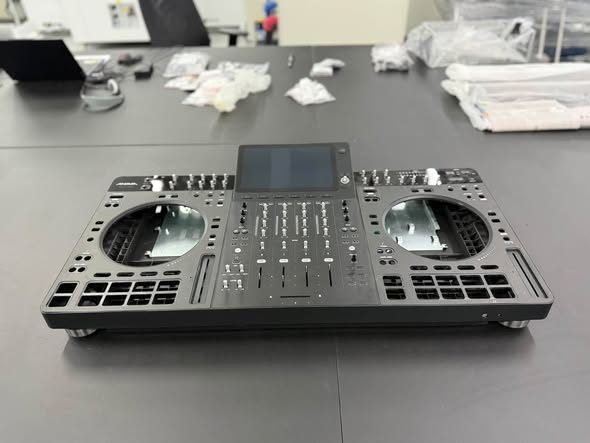
The post explicitly mentions the Klark Teknik ANIMA, the four-channel DJ unit prototype shown by Behringer at the end of October: Mixxx says it welcomes open hardware projects like this one and wants to help bring the device to life. This is what is new compared with the teaser news: for the first time, an existing software project is publicly offering itself as a platform for that hardware.
What is there and what is missing
For now this is a statement of intent. There are no versions, downloadable builds, lists of supported devices or dates: the text says the roadmap must first be established. Mixxx has run on Raspberry Pi for years, and the page shows a video by Phil Willoughby (DJ WillerZ) running Mixxx on a Denon DJ SC Live 4, but this is community work. The problem the team wants to solve is fragmentation: custom Linux images, real-time kernels (modified to reduce audio latency) and forks maintained by individuals. The stated goal is to integrate them into a single upstream codebase.
Two organisational elements make the plan more concrete. The first is Mixxx e.V., the non-profit association set up in July 2026, which will provide build systems, testing and legal support. The second is the possibility for independent projects to become official partners, which could allow them to use the Mixxx name. The post states that Mixxx has never been opposed to commercial hardware, and calls for volunteers: embedded engineers, code reviewers, testers, interface designers and technical writers.
Behringer's hardware, still on paper
On ANIMA, the information is still what came with the teaser. According to Digital DJ Tips and Groove, Behringer is aiming for a price of $300–400, with no spec sheet or release date; rekordbox and Engine DJ will not be official options. Mature software available under an open licence is what cheap hardware might be missing to be usable in the booth.
What to expect
The next concrete step is the publication of the embedded roadmap and the possible launch of an official branch. The latest stable version of Mixxx remains 2.5.6, released on 27 March 2026. For DJs, little changes in the short term; for hardware builders, an official channel reduces the risk of having to maintain a fork alone.