Synthesizers & drum machines
inMusic plans to open MPC and other new gear to coders at NAMM 2027
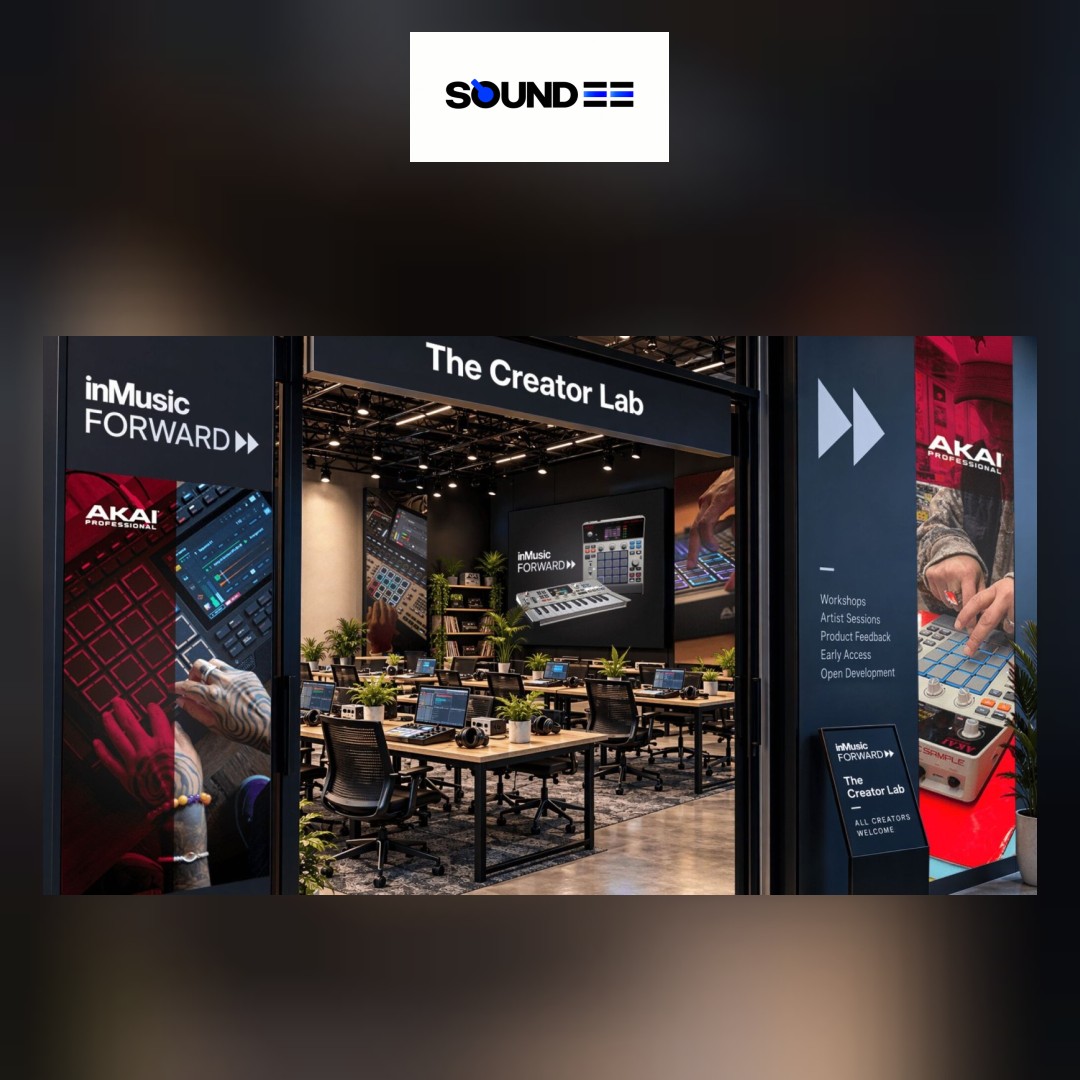
The owner of Akai, Moog and Native Instruments will show 22 new products in January, with a hands-on Creator Lab for custom and AI-assisted code. Many details are still missing.
inMusic, the group that owns Akai Professional, Moog, Native Instruments, Denon DJ and a dozen other brands, intends to open some of the 22 new products it will show at NAMM 2027 to programmers and modders, MPC devices among them. The company's NAMM page confirms the show dates, 28 to 30 January 2027, in Room 204 of the Anaheim Convention Center. It also announces a new "Creator Lab", where visitors can sit down with selected new products and work with inMusic's development team on software, customisation and AI-assisted coding. According to the page, "you don't have to be a developer to participate".
This follows last week's teaser of the Akai MPC Sample Keys, which was shown with a demo of code written with AI help ("vibe coding"). What is new is the scope. In an interview published by CDM on 5 November, inMusic CEO Jack O'Donnell described openness as a policy across the product line, not a one-off feature for a single sampler.
What has been said
CDM reports that inMusic told The Verge it will release versions of both the MPC Sample and the MPC Sample Keys that are open to custom code, and that it will send hardware to developers. CDM also reports that other MPC hardware, including the flagship models, will be open to modding. Less powerful devices may instead get "takeover" firmware, meaning replacement firmware that takes over the whole unit.
The mechanism matters. According to CDM, "open to modding" does not mean the entire firmware is open source, and no licence terms have been announced. On some devices, custom code would run in a separate sandbox. This is an isolated environment that cannot break the core instrument, similar to how Ableton's Extensions work. CDM says previews showed a standalone MPC that could be unlocked, reached over SSH (a remote command-line connection) and extended with custom add-ons. Users would always be able to go back to factory firmware. O'Donnell told CDM: "Openness doesn't require incompleteness".
Why it matters, and what is missing
Open firmware has become one of the season's central hardware stories. Behringer and Polyend have recently opened code on several instruments. Elektron has taken a more restrictive line on hacks. The MPC also has history here: from 2006, JJOS, an unofficial operating system, added features and fixes for the MPC1000 and MPC2500. A sanctioned route for this kind of work could matter to beatmakers who want custom sequencing, sample handling or visuals, without voiding their gear or relying on reverse engineering.
Much is still unconfirmed. inMusic has not named the 22 products. It has not given prices or ship dates, or said which Moog or Native Instruments devices are involved. CDM says a new MPC SDK (software development kit) is expected, but gave no details. Whether the sandbox gives developers real access to audio and sequencing, or only a limited scripting layer, will decide how open these instruments turn out to be.