Events
Crystal Waters brings the voices of house to Times Square
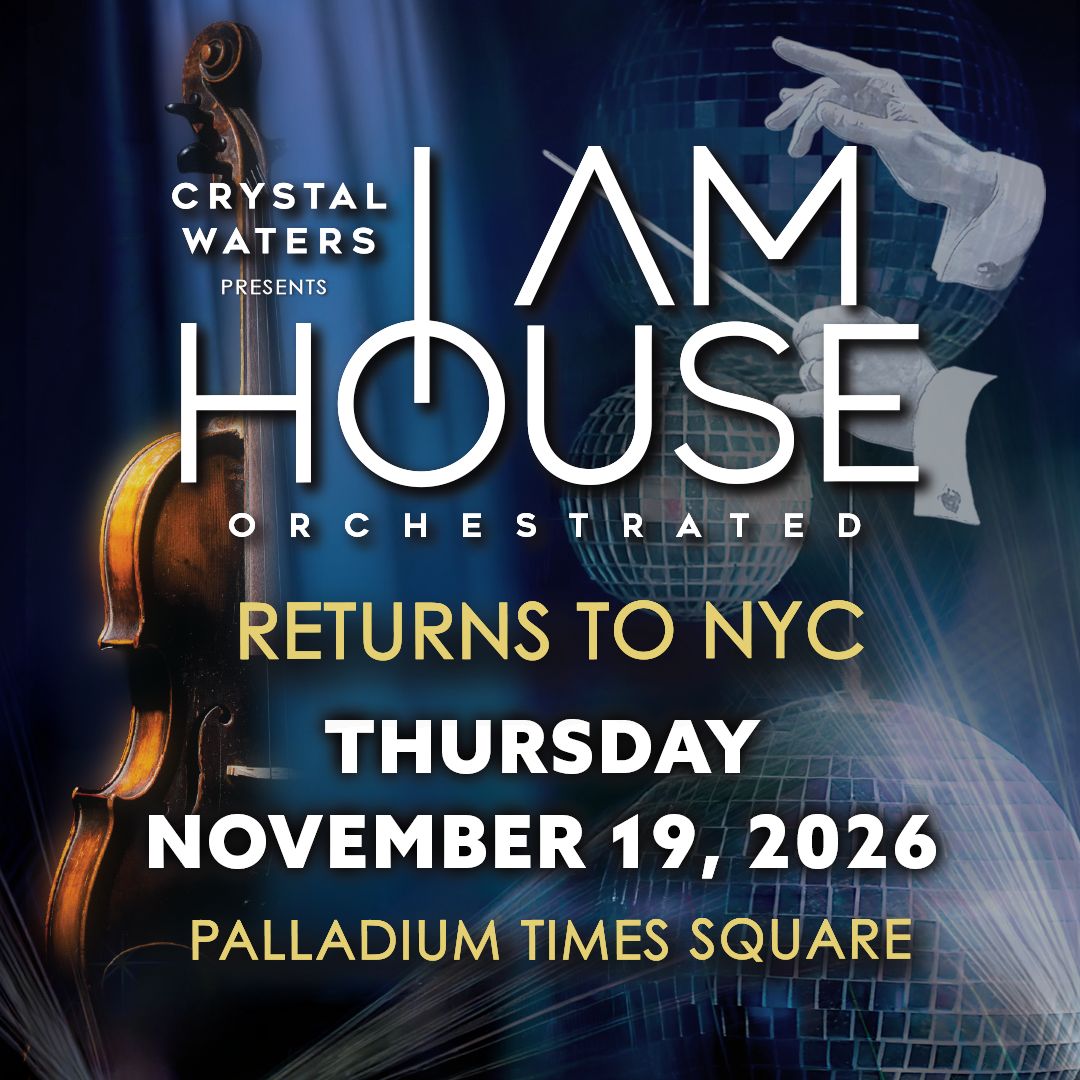
On Thursday, 19 November, Crystal Waters brought I AM HOUSE Orchestrated to Palladium Times Square in New York. The first-anniversary edition paired a full live orchestra with a bill that included Deborah Cox, Billy Porter, CeCe Peniston, Barbara Tucker, Inaya Day, Duane Harden, Thea Austin and Amuka, with DJ Spen on the decks. In a Facebook video from the night, Porter described a packed house. Earlier that day, he and Waters had appeared on the Tamron Hall Show to talk about the project, with a television performance of ‘Gypsy Woman’ introducing the concert to a daytime audience.
Waters had already tested the idea a few blocks away. The production debuted at Sony Hall on 20 November 2025, presented by New York nightlife impresario Susanne Bartsch, and sold out. It went to Miami’s James L. Knight Center during Miami Music Week the following March. The anniversary show brought it back to Manhattan in a bigger room. Its name comes from ‘I Am House’, the single Waters made with Sted-E & Hybrid Heights that topped Billboard’s Dance Club Songs chart in 2018. Her best-known records came out in the 1990s. The record that gave the show its name came nearly three decades later.
The story behind ‘Gypsy Woman (She’s Homeless)’ explains why Waters makes such a persuasive host. In her PBS News Hour interview, she recalled trying to sing in the mould of Sade before Baltimore’s Basement Boys handed her tracks to write over. She also recalled the real woman who inspired the 1991 single, who wore makeup when she went out to ask for money because she wanted to be treated with respect. The record’s organ figure and wordless refrain travelled far beyond the clubs that first played it. Listen past the hook and the song is still a portrait of a woman insisting on her dignity. ‘100% Pure Love’, her 1994 follow-up hit, showed how naturally Waters could write for the dance floor and the pop charts at once.
The Palladium bill traced several routes through that history. CeCe Peniston’s ‘Finally’ turned the moment of finding someone into a communal refrain. Barbara Tucker’s ‘Beautiful People’ brought the force of gospel singing to a New York club record. Inaya Day’s voice helped carry ‘Horny ’98’ across European dance floors, while Thea Austin co-wrote and sang on Snap!’s ‘Rhythm Is a Dancer’. Duane Harden supplied the vocal on Armand Van Helden’s ‘You Don’t Know Me’, and Amuka, the dance alias of Sheila Brody, brought another generation of clubgoers ‘Appreciate Me’. Cox had meanwhile built a parallel life on dance floors through remixes of her R&B records, notably ‘Nobody’s Supposed to Be Here’. And Porter, who played Lola in Kinky Boots and Pray Tell in Pose, had a dance hit of his own in ‘Love Yourself’. Those catalogue landmarks explain the shape of the bill.
New York belongs in this story from the beginning. Before Frankie Knuckles took up his residency at Chicago’s Warehouse in 1977, he had worked alongside Larry Levan at New York’s Continental Baths. The Warehouse’s early crowd was predominantly Black and gay, and Levan went on to define the sound of New York’s Paradise Garage. Those rooms gave DJs time to stretch records and dancers room to find their own ways of moving. Waters told PBS that finding the New York club crowd felt like finding her home. That sense of belonging is part of what an anniversary show in Times Square can bring back into view.
Waters pointed out in the PBS interview that many of the original records already used string sounds played on keyboards. Giving those lines to live players changes how they breathe and how a singer can phrase against them. With Spen on the same bill, the anniversary also kept the DJ in view, the person who knows how long to hold a groove before a voice comes back in. That relationship between the singer, the rhythm and the people moving to it is what Waters carried from the club into the Palladium.