Software
Universal Audio models Capitol Studios A and B in a $249 native plug-in
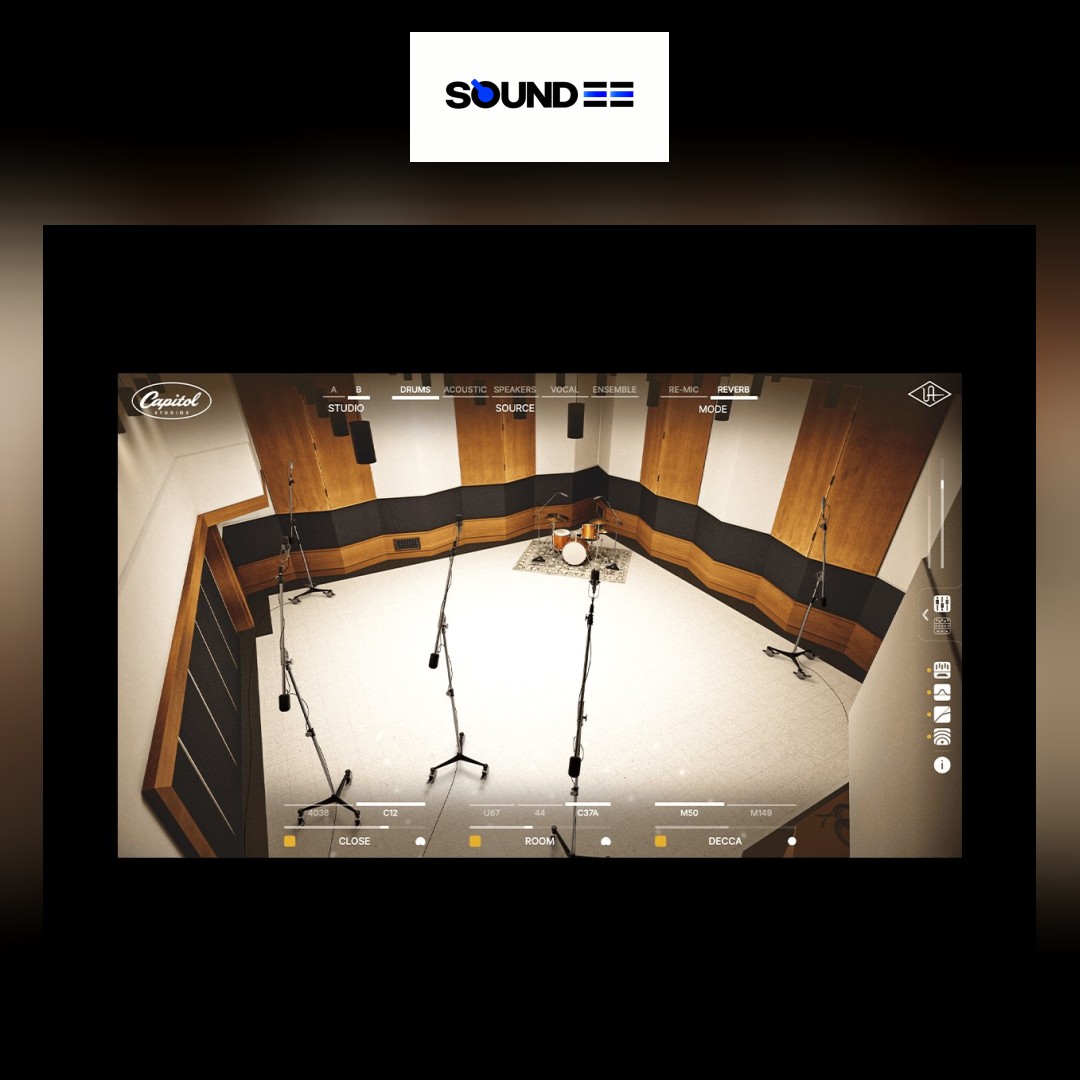
Beyond the famous echo chambers, the new UAD plug-in recreates the Hollywood rooms, a curated mic locker, console channels and outboard, with a mode that replaces a recording's own room sound.
Universal Audio has released UAD Capitol Studios, a native plug-in that models Studios A and B in the Capitol Records Tower in Hollywood, along with the four underground echo chambers beneath the building. It runs on macOS and Windows without UA hardware, in VST3, AU and AAX formats. It costs $249 and is included in the UAD Spark Studio subscription, according to the UA product page and KVR. UA has previously modelled the chambers on their own, with Capitol Chambers. This release extends the model to the main recording rooms.
Two modes, two rooms
The plug-in works in two ways. Reverb mode adds Capitol's ambience on top of an existing sound. Re-Mic mode is meant to replace the room and microphone character of a track recorded elsewhere, so a vocal from a small booth could, in principle, be placed in a large orchestral hall. Gearnews describes Studio A as an orchestral hall of about 1,500 square feet with a modern Neve 88RS console. Studio B is about 1,000 square feet, with an isolation booth and a vintage Neve 8068. Each room has Live and Tight settings that simulate the movable wooden panels used to change decay time.
Microphone setups were curated by Capitol engineer Steve Genewick. The mic locker includes models of the Neumann U48, U67 and M50, the AKG C12 and the Sony C-800G. UA calls its "Dynamic Room Modeling" a way to drag virtual microphones around the room and hear the response update in real time. For ensembles there are three mic positions, including a Decca Tree, the classic three-microphone array used for orchestras, with separate control of its centre and sides.
Chambers, consoles and caveats
The four echo chambers, numbered 1, 3, 5 and 8, have adjustable decay, pre-delay and stereo width. UA says decay can be shortened beyond what the physical rooms allow. A processing section adds console EQ and dynamics from the two studios, plus models of the 1176LN and LA-2A compressors and the Capitol Mastering Compressor, in an order the user can change. Presets come from past and present Capitol engineers, producers and musicians.
The most ambitious claim is Re-Mic. Removing the sound of one room and replacing it with another depends heavily on how dry the source is, and UA's materials do not say how the plug-in deals with heavy existing reverb. Pricing also varies by retailer: Gearnews lists $234 or £212 at Thomann, and says existing Capitol Chambers owners can find discounts in their UA account. UA's page does not mention an upgrade path. For engineers working on orchestral, jazz or vintage-pop material, the appeal is having a model of a heavily documented studio available as a mix-stage tool. How convincing it sounds can only be judged by listening.